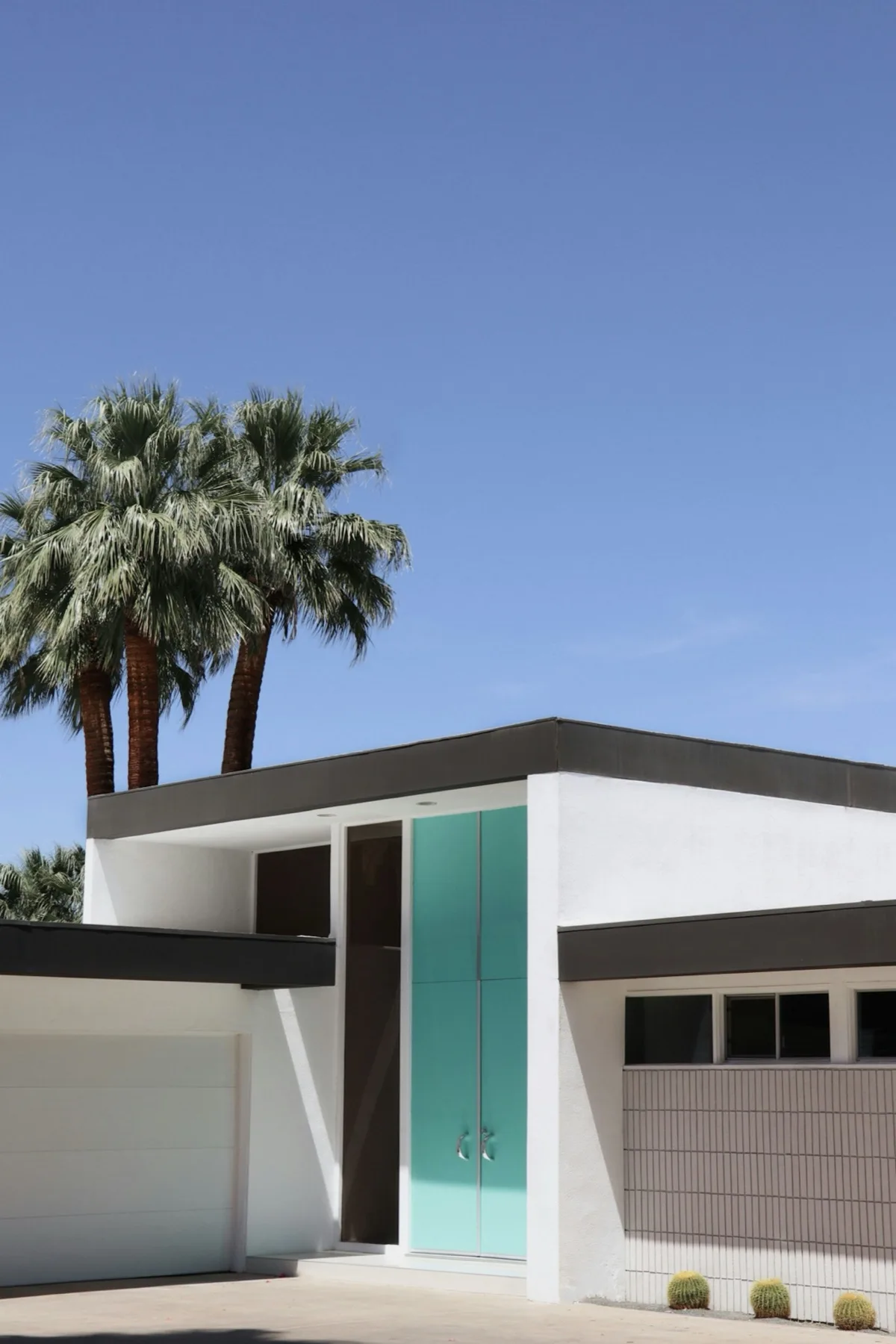
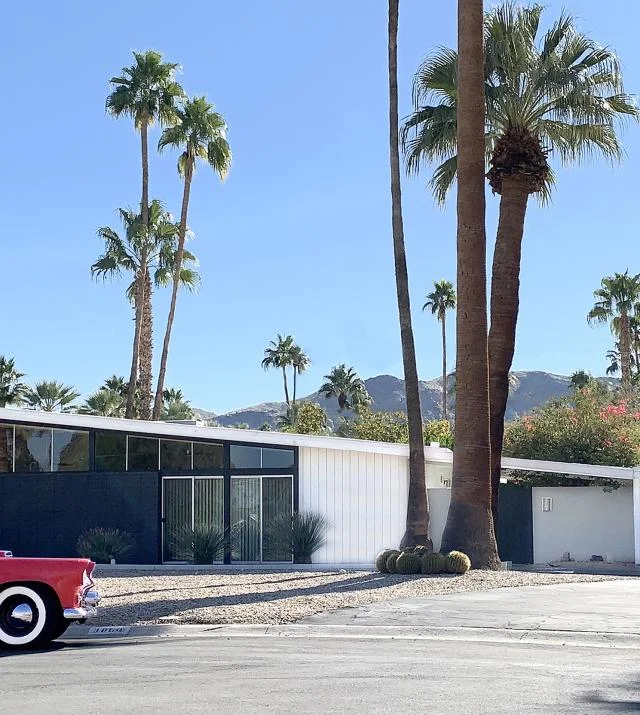
Palm Springs has more midcentury modern architecture per square mile than anywhere else in the country. This is not marketing copy. The city became a weekend escape for Hollywood in the 1940s and 50s, and the architects who followed built in a style that fit the desert: flat roofs, wide overhangs, glass walls, carports instead of garages. Most of it is still standing, lived in, and walkable from the street.
This tour covers eight stops across the main neighborhoods. It works as a driving tour with short walks, or as a longer walking tour if you're based downtown. Budget two to three hours, longer if you stop to photograph seriously.
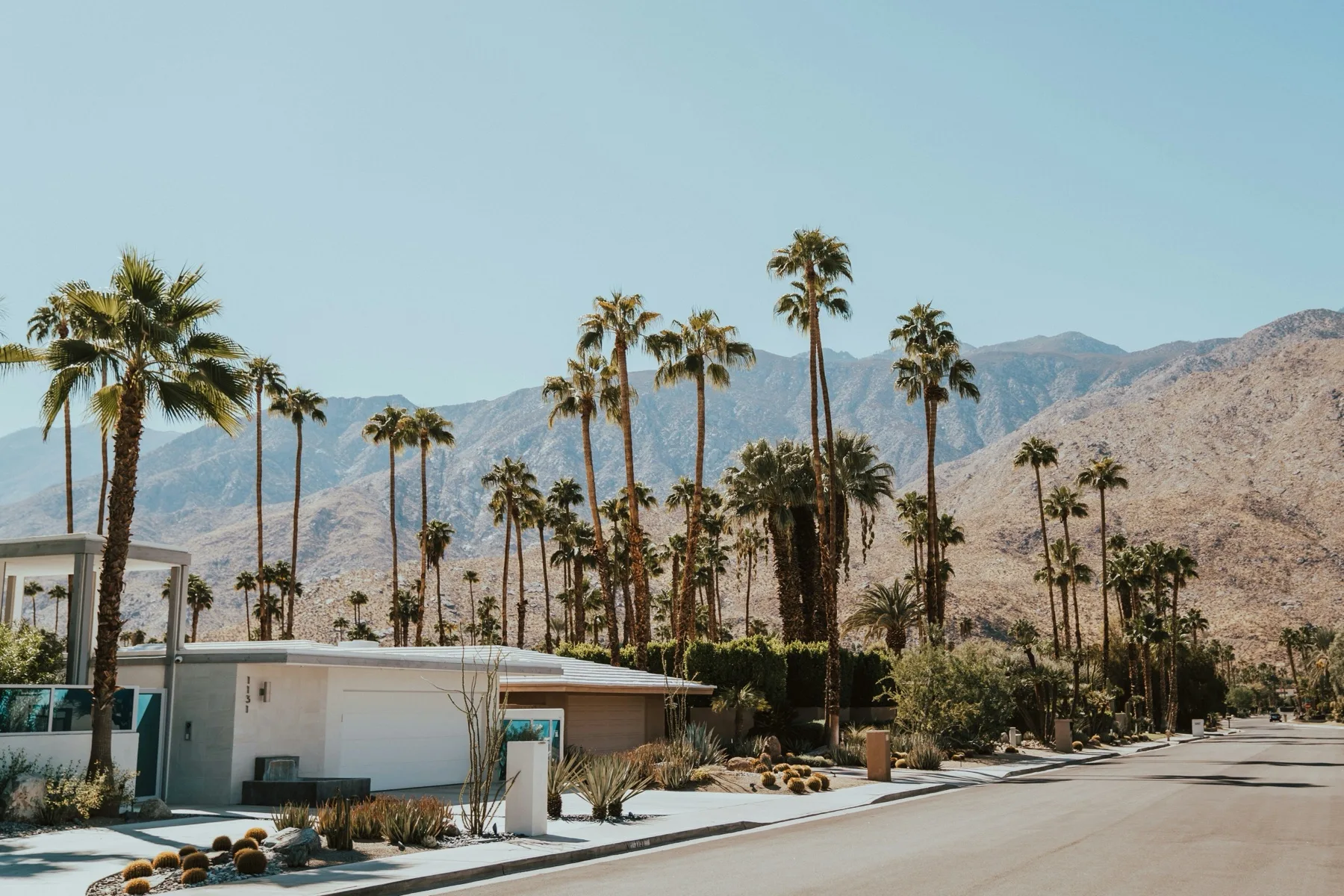
The residential neighborhoods in Palm Springs look like this. Drive slow and stop often.
When to Go
Golden hour, specifically the hour before sunset. The low desert light hits the white stucco, glass, and steel in a way that no other time of day replicates. The mountains turn pink, shadows get long, and the neighborhood feel shifts from afternoon to evening. If you can only do one time of day, late afternoon is the answer.
Early morning works too, especially in summer when temperatures are manageable before 10am. Midday is fine for driving but less interesting photographically.
Stop 1: Downtown Palm Canyon Drive (Starting Point)
Start at the intersection of Palm Canyon Drive and Tahquitz Canyon Way. This is the center of downtown. Before heading into the neighborhoods, walk one block south on Palm Canyon to see the Desert Inn Fashion Center and the surrounding commercial architecture from the 1950s and 60s. William Cody designed several buildings in this stretch.
The Palm Springs Visitor Center at 2901 N Palm Canyon Drive, a few miles north, is a 1965 Frey-designed former gas station worth a quick stop. Albert Frey made a career of integrating desert materials into modern forms. This building shows exactly how.
Stop 2: Movie Colony (East Palm Canyon / Alejo Road Area)
Head east on Alejo Road past Indian Canyon Drive. The Movie Colony neighborhood sits east of downtown and north of East Palm Canyon Drive. Frank Sinatra lived here. So did Cary Grant. The neighborhood attracted both Hollywood names and their architects, and the residential streets still read that way.
Walk along El Alameda and Via Lola. The homes are private, but almost all of them are visible from the street and the architecture is dense. Richard Neutra designed several homes in this area in the late 1940s and early 1950s. Look for the integration of indoor-outdoor space: the houses are designed to dissolve the wall between the living room and the yard.
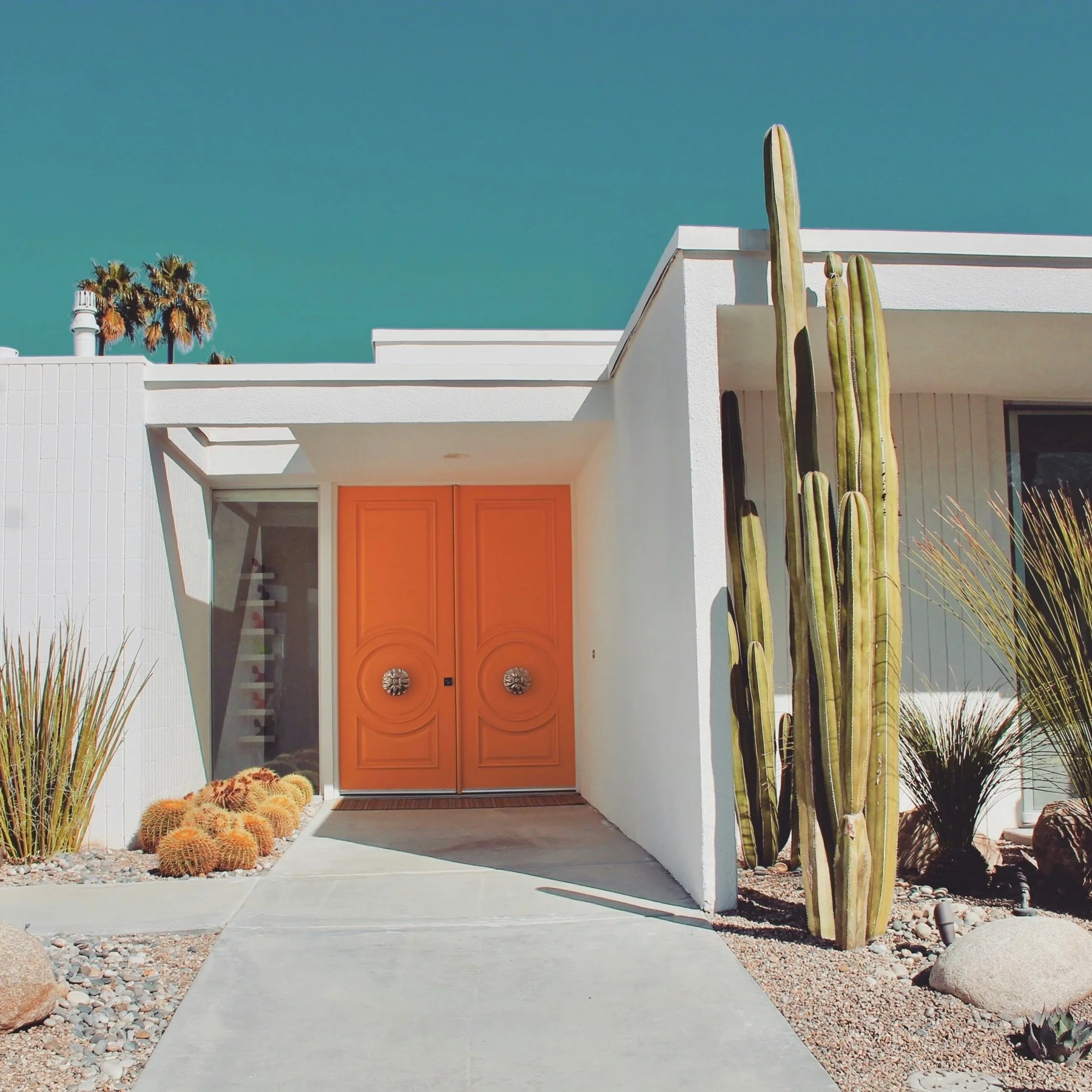
Color was intentional on these doors. The architects and owners used it to mark entries and create focal points against white stucco.
Stop 3: Old Las Palmas (Via Monte Vista / Camino Norte)
Old Las Palmas is northwest of downtown, bounded roughly by Via Monte Vista, Camino Norte, and West Vista Chino. This is where the larger estates sit, many of them hidden behind hedges and walls but visible in section from the street.
The Kaufmann Desert House at 470 W Vista Chino is Richard Neutra's most celebrated desert project, designed in 1946. It's a private residence and not open to the public, but the exterior is visible from the street. The horizontal lines, the flat roof cantilevered over the living area, and the connection between interior and pool deck defined what desert modernism looked like going forward.
Stop 4: Vista Las Palmas (Via Colusa / Via Monte Vista)
Vista Las Palmas sits directly north of Old Las Palmas and is probably the most photogenic neighborhood in the city. Developed in the late 1950s and early 1960s, it has a consistent midcentury character without the mix of newer construction that dilutes some other neighborhoods.
Walk along Via Colusa, Via Vaquer, and Via Las Palmas. The combination of butterfly roofs, brise-soleil screen walls, and desert landscaping is dense here. This neighborhood is where you'll burn most of your camera roll.
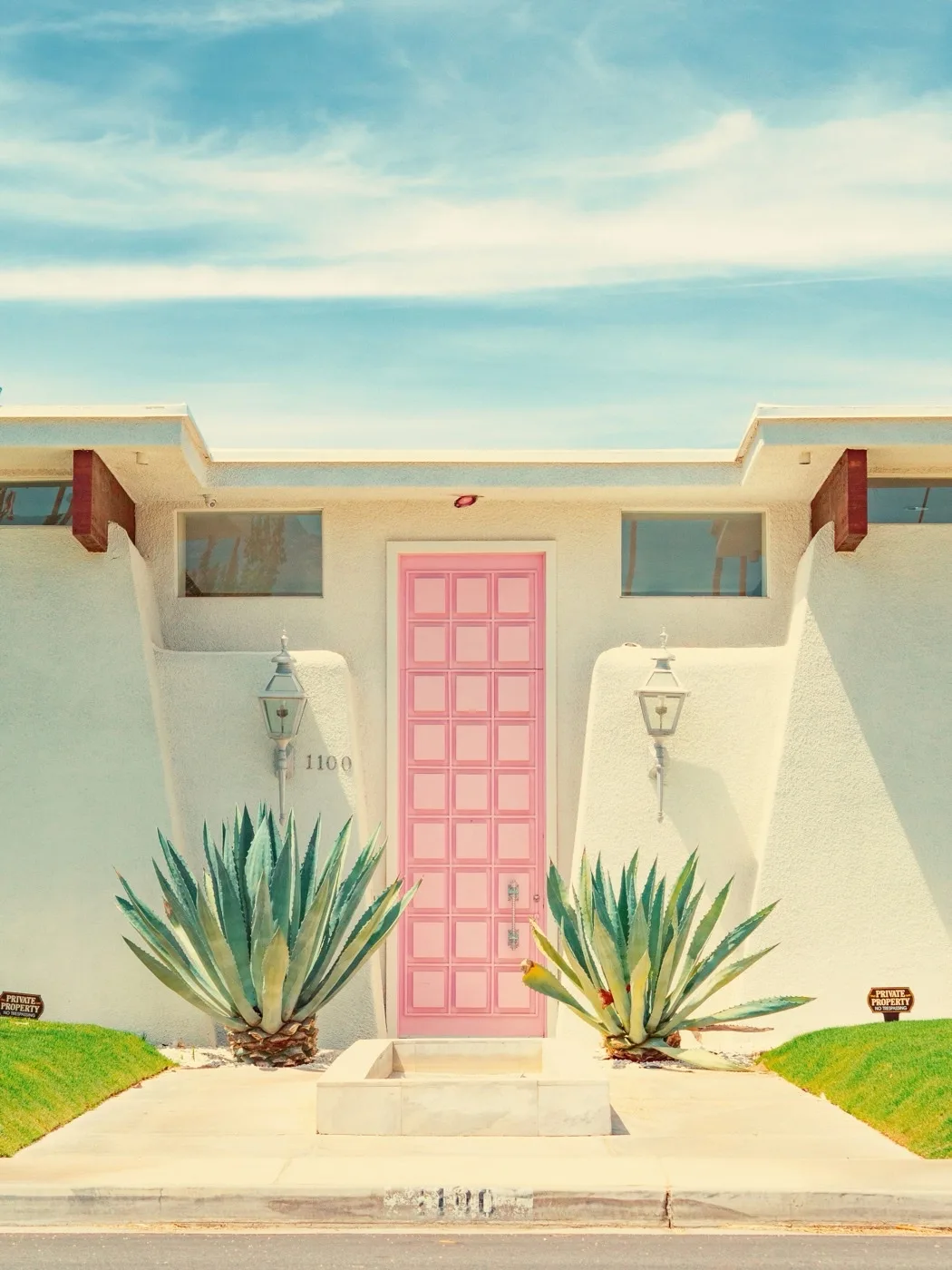
Vista Las Palmas has this kind of streetscape for several blocks. It's worth walking slowly.
Stop 5: Twin Palms (Via Miraleste / Via Olivera)
Twin Palms was developed by William Cody in the early 1950s as a planned midcentury neighborhood. The homes here share a consistent architectural language: post-and-beam construction, low-pitched roofs, glass walls. Frank Sinatra's original Palm Springs home, the "Twin Palms Estate," was in this neighborhood.
Drive along Via Miraleste and Via Olivera in the southern part of the neighborhood. The streets are quieter and more residential than the neighborhoods closer to downtown.
Stop 6: Donald Wexler's Steel Houses (Sunrise Park)
On Sunny Dunes Road near Sunrise Way, Donald Wexler designed a series of prefabricated steel homes in 1961 for Alexander Construction Company. These are among the most architecturally unusual buildings in the city: the steel frame is visible from the exterior, and the construction method is apparent in the proportions of the windows and walls.
Wexler also designed the Palm Springs airport terminal in 1965. If you're flying out of PSP, it's worth noticing. The steel construction is the same logic at a different scale.
Modernism Week in February opens many private homes for tours. The line to get into the Kaufmann House alone is worth planning a trip around.
Stop 7: Uptown Design District (N Palm Canyon, Alejo to Tamarisk)
Return downtown via N Palm Canyon Drive through the Uptown Design District. The commercial buildings along this stretch represent a different mode of midcentury modern: retail, restaurants, and professional buildings designed by Albert Frey, William Cody, and others. The Tramway Gas Station (now the Visitor Center) bookends the north end. The corridor itself is worth walking: there are specific buildings that would be landmarks in any other city, sitting here as ordinary storefronts.
Stop 8: Palm Springs Art Museum (N Museum Drive)
The Palm Springs Art Museum at 101 Museum Drive includes an architectural wing and hosts permanent and rotating exhibitions on California modernism, including architecture. If the tour gets your interest up and you want context and deeper history, this is the place. There's also a sculpture garden that the building opens onto. Worth an hour minimum.
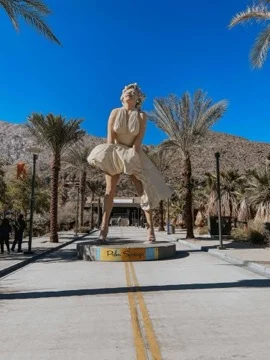
The Palm Springs Art Museum has a dedicated architecture exhibition. If you want names and dates attached to what you've been seeing, this is the next stop.
Parking and Logistics
Downtown parking is free in most surface lots on Saturdays. The residential neighborhoods have street parking throughout. You will not struggle to park at any of the stops on this list. The bigger issue is that some streets in Vista Las Palmas and Old Las Palmas are narrow, so park once and walk a cluster rather than trying to move the car every block.
The Palm Springs Architectural Foundation runs guided tours year-round that cover more ground with historical context. Their walking and bus tours are worth booking if you want names and stories attached to what you're seeing.
Modernism Week: The Amplified Version
Modernism Week happens every February in Palm Springs. For 11 days, private homes open for tours, architects give talks, and the city essentially becomes one large architecture event. The Kaufmann House alone typically has a multi-hour wait. If midcentury architecture is a serious interest rather than a casual one, plan a February trip around it. The full guide to what to expect at Modernism Week covers the ticketing process and which events are worth prioritizing.
The Sundune is 10 minutes from downtown Palm Springs and within walking distance of the Uptown Design District. If you're staying with us, you're already positioned to do this tour on arrival day without a car for most of it. More on the neighborhood in the Sundune local guide.
Where to Stay
The Sundune is 10 minutes from downtown Palm Springs, walking distance from the Uptown Design District, and close to the main architectural neighborhoods this tour covers. It's a midcentury-influenced two-bedroom condo in a gated community with a pool. The right base for doing this properly.