You're standing in the living room of a house built in 1957. The floor-to-ceiling glass faces the San Jacinto mountains at exactly the angle the architect calculated for the morning light. The roofline is flat. The overhang is deep enough to kill the direct sun in summer but let the low winter sun through. The pool is the center of the floor plan, not an afterthought tacked on later. Whoever designed this solved the desert in a way that hasn't been improved on since.
Palm Springs has more intact midcentury modern homes than anywhere in the United States. Not the most famous individual buildings, but the most of them, still standing, still lived in, largely unchanged. I own a vacation rental here and have walked these streets more times than I can count because they're one of the best things to do in this city. This is a practical guide for someone who wants to understand what they're looking at and make the most of a few hours on foot.
Why Palm Springs Has This Much MCM
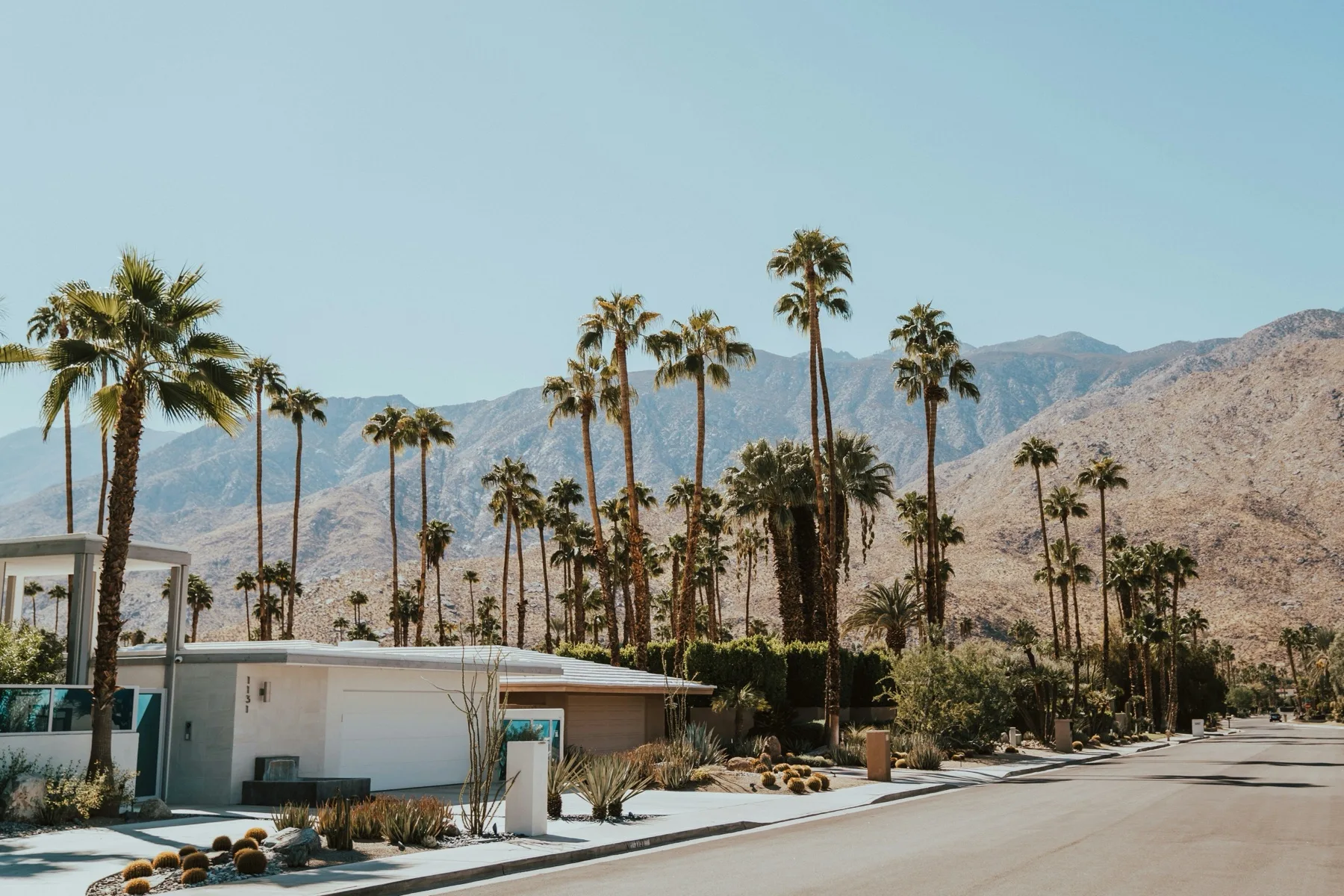
A residential block in Palm Springs. Most of these homes date from 1945 to 1970. Many have barely been altered.
Two things converged in Palm Springs starting in the late 1940s. First, it became a weekend destination for Hollywood money: film stars, studio executives, and the people around them who wanted a desert retreat close to LA. Second, the architects they hired were young practitioners of modernism, working in a place with no established aesthetic tradition and a climate that demanded covered overhangs, passive cooling, and indoor-outdoor connection.
Albert Frey, William Cody, E. Stewart Williams, Donald Wexler, and Richard Neutra all worked here extensively. The houses they designed suited the desert in a way that traditional architecture didn't: flat roofs (no rain to shed), large glass walls facing mountain views, deep overhangs to block direct sun, and pools as central organizing features rather than afterthoughts.
When modernism fell out of fashion in the 1970s and 80s, Palm Springs didn't get demolished and rebuilt. The city went quiet. Prices dropped. The houses sat. When the preservation movement found them in the 1990s and early 2000s, most were intact. That neglect, paradoxically, is why they survived.
The Self-Guided Walk: Where to Start
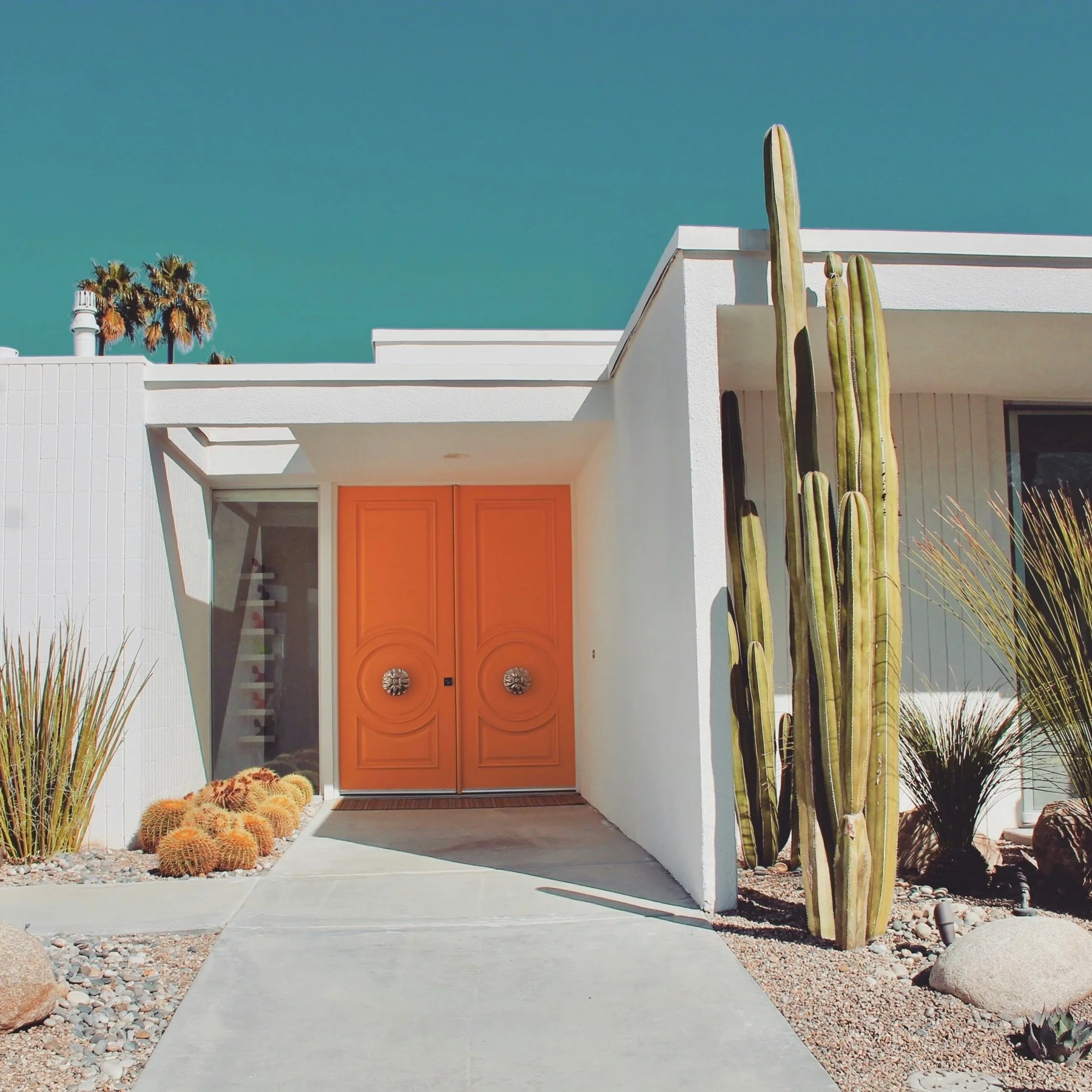
The front door color on MCM homes is often the loudest statement on the whole house. Orange, turquoise, coral, and yellow were all common. Most have been maintained or restored to period colors.
Start at the corner of North Palm Canyon Drive and Alejo Road. This is the northern edge of the historic residential district. Park here (street parking is usually available weekday mornings and evenings) and plan to walk for 1.5 to 2 hours.
The streets worth covering, in rough order:
- Via Norte and Via Escuela: Two parallel residential streets running north-south off Alejo. Dense concentration of 1950s and 60s homes, many original paint colors, deep carports, clerestory windows. Start here.
- Stevens Road and Tamarisk Road: Slightly larger lots, some standout individual homes. Neutra's Kaufmann Desert House (1946) is at 470 West Vista Chino, about a mile east. Not technically on this walk but worth adding if you have the time and want to see the most famous building in the valley.
- Movie Colony neighborhood: Just northeast of downtown, this is where the celebrity houses were. Bob Hope's UFO house by John Lautner is visible from the road at 40-477 Thunder Mountain Road (you can't enter but you can see the form from the street). More human-scale MCM homes line the surrounding streets.
- Ruth Hardy Park perimeter: The blocks around this park, centered near Caballero and Avenida Caballeros, have a dense mix of apartment buildings and single-family homes from the late 1950s. The apartment complexes here are underrated: Alexander Construction's two-story walkups with breezeblock walls and carport strips are canonical desert modernism.
What to Look For
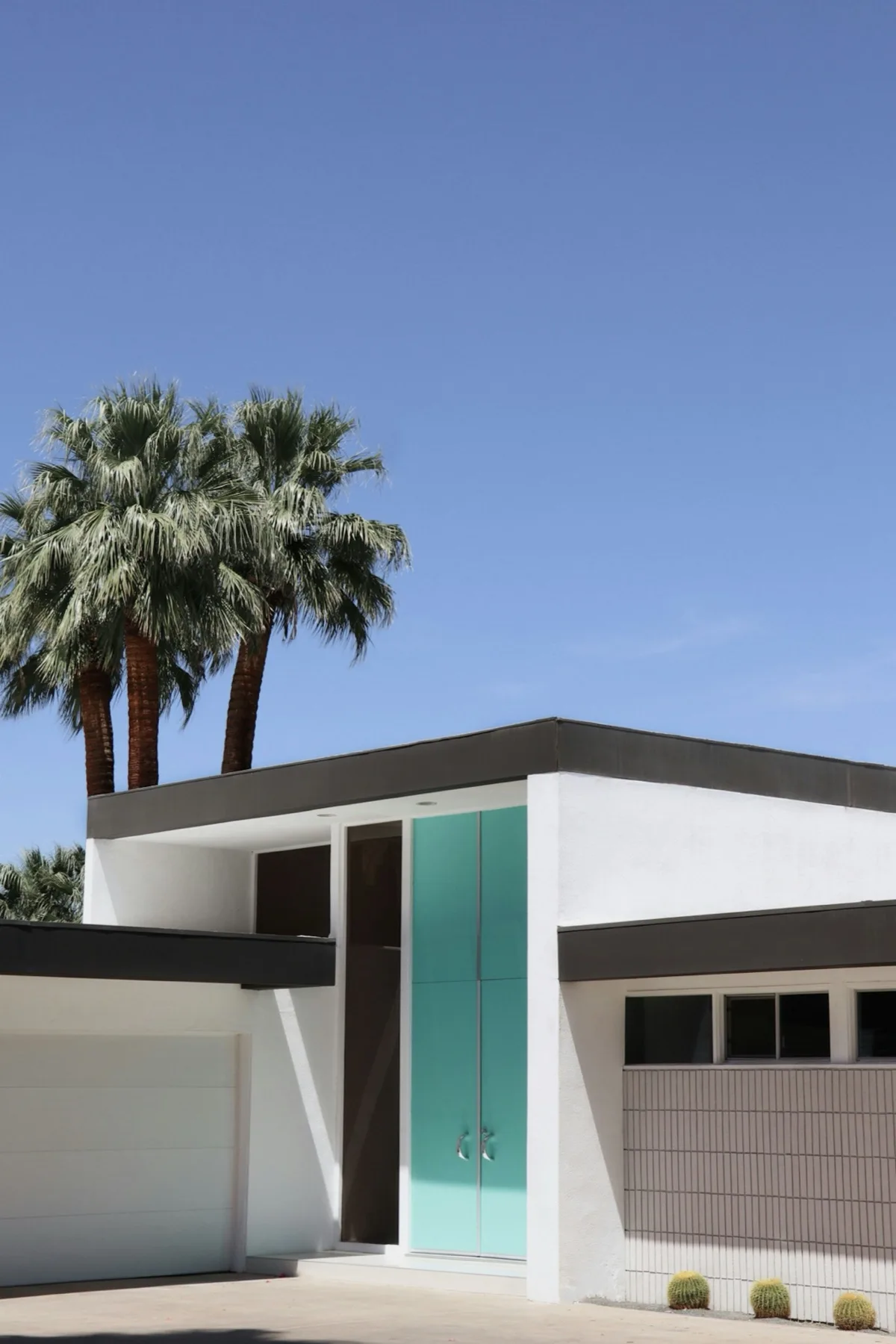
Breezeblock screens, carports with butterfly roofs, and original tile work appear on almost every block. Once you start noticing the details, you can't stop.
If you don't know much about architecture, here's what to look for. These features define the style and you'll start seeing them on every block once you know what they are:
- Flat or butterfly roofs: No pitched roofs. Either completely flat with a slight internal drain, or the butterfly shape (two roof planes sloping down toward each other in the middle) that became a Palm Springs signature.
- Breezeblock or screen block walls: Decorative concrete masonry units with geometric cutouts, used as garden walls, patio screens, and entry features. They're everywhere. Each pattern is different: pinwheels, stars, rectangles, diamonds.
- Deep eave overhangs: A wide horizontal roof plane extending past the wall to create shade. In Palm Springs, this wasn't decorative. Sun angle at latitude 33N means that a properly sized overhang blocks direct sun in summer but lets winter sun in. It's passive solar built into the form.
- Post-and-beam structure: Exposed steel or wood posts at corners, with the roof sitting visibly on top. The walls become infill, not structural. This is why you can have floor-to-ceiling glass on a whole side of a house: the glass isn't holding anything up.
- Original door colors: Atomic tangerine, turquoise, coral, lemon yellow. The color often reads as the only applied decoration on an otherwise restrained house.
The Alexander Construction Company
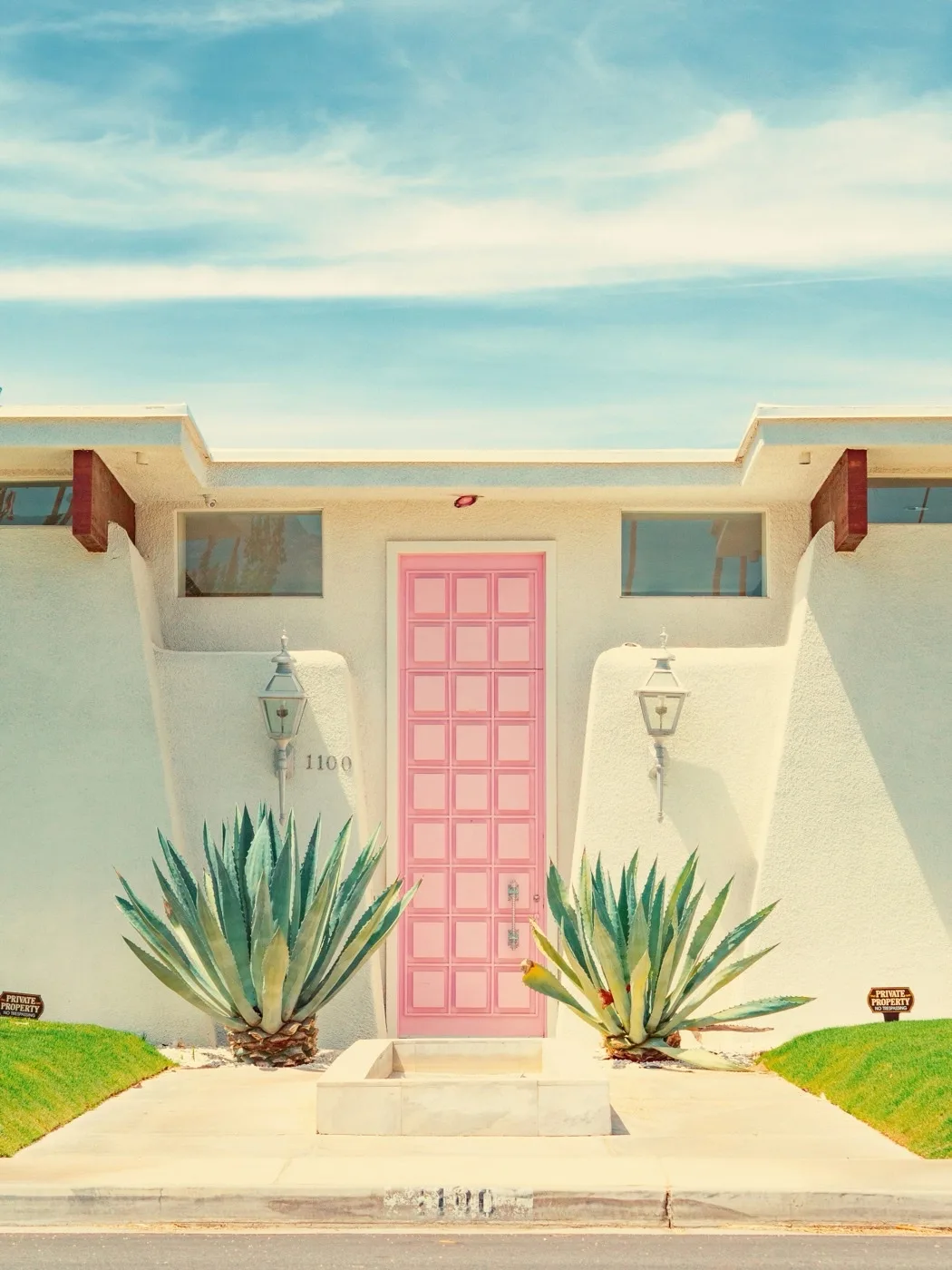
The Alexander Construction Company built over 2,000 homes in Palm Springs between 1955 and 1965. These production MCM houses are as distinctive as the custom work.
George Alexander and his son Robert built over 2,000 homes in Palm Springs between 1955 and 1965. They hired architects, including William Krisel, to design plans that could be built efficiently at scale. The result is the Palmer and Krisel-designed tracts you'll see throughout north Palm Springs: clean lines, varied rooflines, quality material choices, and a level of architectural consistency across entire neighborhoods that was rare in postwar tract development anywhere.
These aren't museum pieces. They were builder homes. Middle-class families bought them. That's part of what makes Palm Springs unusual: the modernism was democratic. It wasn't only for the wealthy or the famous. The house where a studio secretary lived looks architecturally related to the house where a film director entertained on weekends.
The Best Time to Do This Walk
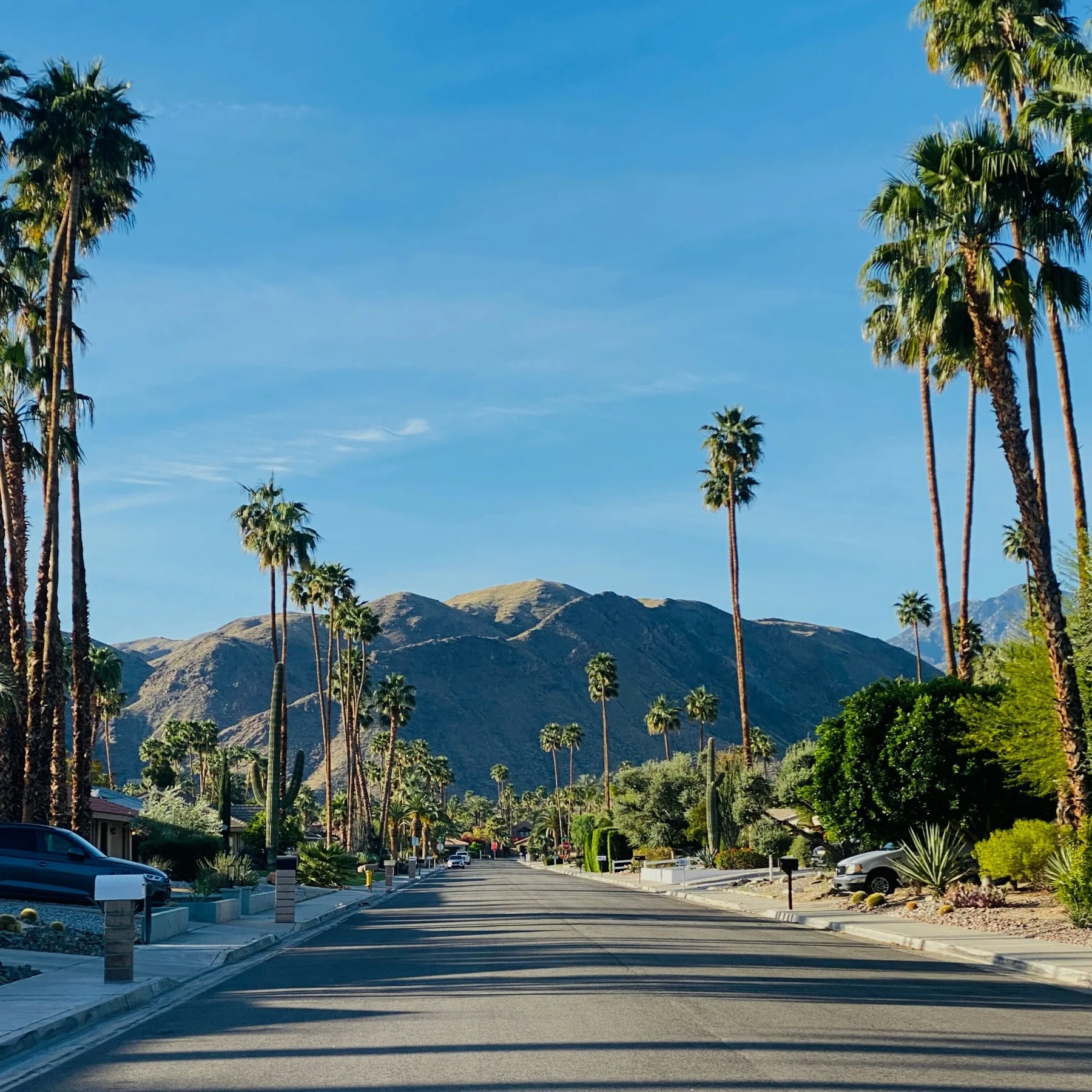
Early morning light in Palm Springs is the best light for architecture. The mountains are sharp, the shadows are long, and the streets are quiet before 9am.
Early morning is best: 7am to 9am in warm months, 8am to 10am in winter. The light is low and directional, which makes flat architectural surfaces read with depth and shadow. Midday light flattens everything. Late afternoon is second best, and the golden hour before sunset is genuinely beautiful if you're there in fall or spring.
Avoid midday in summer (May-September). Daytime temps regularly hit 105-110 degrees. If you're visiting in summer, do the walk early and save the afternoon for the pool. The architecture will still be there at 7am.
Guided Tours and Resources
If you want more context, a few options:
- Palm Springs Architectural Foundation: The PSAF website has self-guided tour maps, docent-led walking tours on select weekends, and a property database. The maps are free and printable.
- Modernism Week: Held annually in February, Modernism Week includes tours of homes that aren't otherwise publicly accessible. If you care about this stuff at all, it's worth planning a trip around. Tickets for the interior tours sell out months in advance.
- Palm Springs Art Museum Architecture and Design Center: Small museum in a historic bank building on Museum Drive, with rotating exhibitions on desert architecture. Usually free on first Friday evenings.
- Christopher Bunn's walking tour videos: Search YouTube for Palm Springs architecture walking tour. His videos are useful for identifying specific buildings before or after your walk.
After the Walk
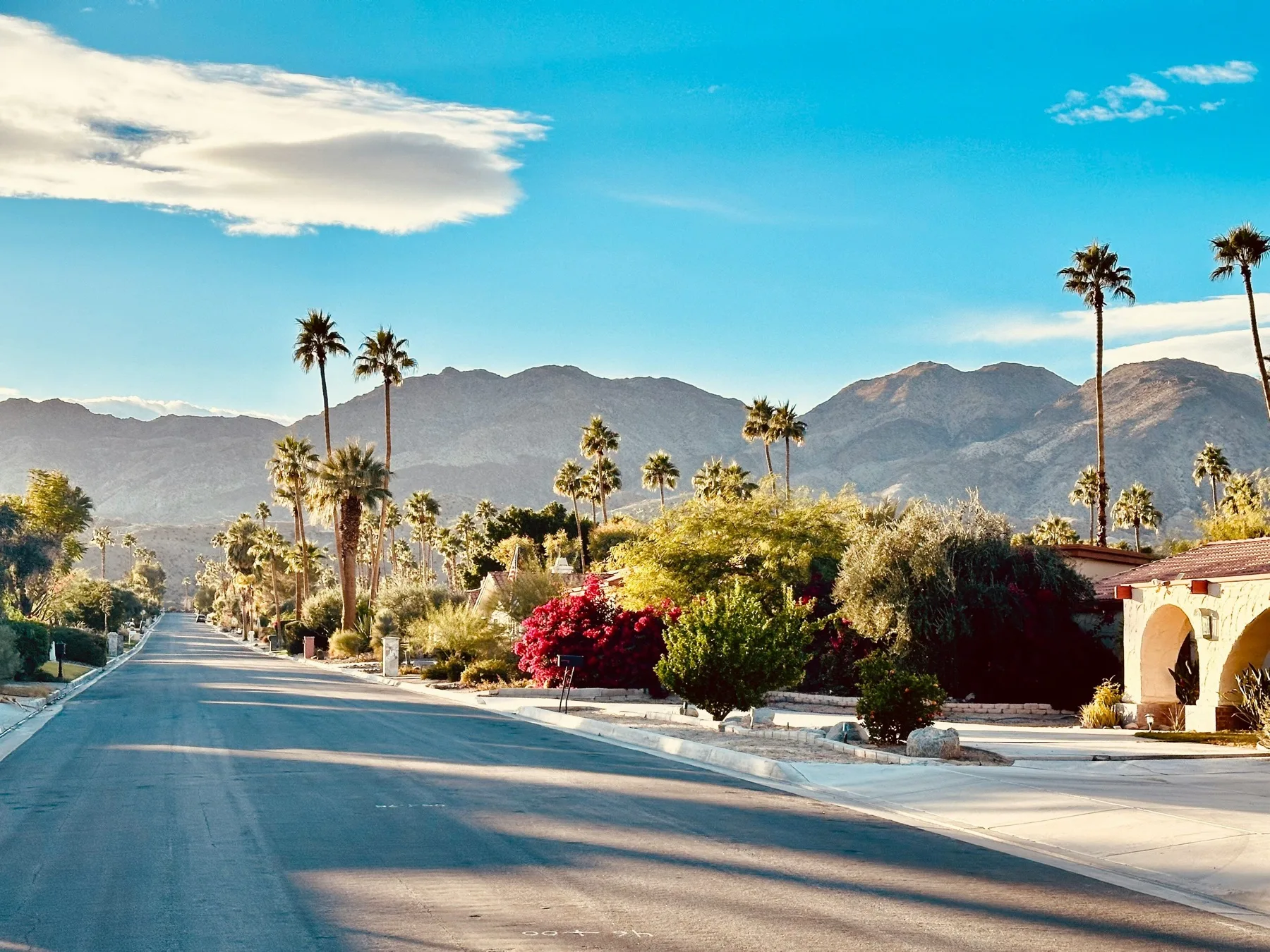
The residential streets in Palm Springs reward wandering. There's no wrong direction.
The walk ends naturally back near downtown Palm Canyon Drive, which puts you within a few blocks of everything: Koffi for coffee, Cheeky's if you want brunch, the Village Green for a shaded break before heading to the car.
A few related things to know: The Palm Springs weekend itinerary has a full two-day structure if this is your first time in the city. If you want a driving tour instead of a walking tour, the Palm Springs midcentury driving tour guide covers 8 specific stops with real street names and golden hour timing. And if you're planning a longer stay in the area and want to understand the differences between Palm Springs and Indio, the comparison guide covers the trade-offs honestly.
Frequently Asked Questions
What neighborhood in Palm Springs has the best midcentury modern homes?
Vista Las Palmas, bounded by Via Colusa, Via Vaquer, and Via Las Palmas, has the most consistent MCM streetscape in the city. Butterfly roofs, breezeblock screen walls, and desert landscaping are dense here with very little dilution from newer construction. Old Las Palmas and the Movie Colony are also strong, with larger estates and a few of the most photographed houses in the valley.
Can you tour the Kaufmann Desert House?
Not typically. The Kaufmann Desert House at 470 W Vista Chino is a private residence. The exterior is fully visible from the street, which is worth doing. During Modernism Week in February, some private homes open for ticketed interior tours, though the Kaufmann House lineup often runs several hours.
What is the Alexander Construction Company and why does it matter?
George and Robert Alexander built over 2,000 homes in Palm Springs between 1955 and 1965, hiring architects including William Krisel to design plans at scale. The result was affordable midcentury modern housing across entire neighborhoods, not just custom estates for the wealthy. That democratic spread is why Palm Springs has so much intact MCM: it wasn't only for the rich, so there was much more of it to survive.
What is the best time of year to walk the Palm Springs architecture neighborhoods?
October through April, early morning. The light is best before 9am, the streets are quiet, and the temperature is genuinely comfortable for walking. Summer mornings work too if you're out before 8am, but the window is narrow before the heat makes walking unpleasant. Avoid midday in any season for photography: flat overhead light kills the shadows that give the architecture its depth.
Staying in Palm Springs for the architecture and everything else the city has? The Sundune is a 2-bedroom condo in Palm Springs with a balcony and pool access. Walk distance to North Palm Canyon. Check availability.