Ten minutes. That's how long the ride takes. You get in at the Valley Station at 2,643 feet, the car rotates slowly as it climbs, and by the time you step out at the Mountain Station you're at 8,516 feet and it's 30 to 40 degrees cooler.
In summer, that temperature drop is the whole point. In winter, there's actual snow up there while the valley floor is sitting at 70 degrees. The Palm Springs Aerial Tram is one of the most visited attractions in the Coachella Valley and, in my experience, one of the few that earns the attention.
Here's what you need to know before you go.
What It Actually Is
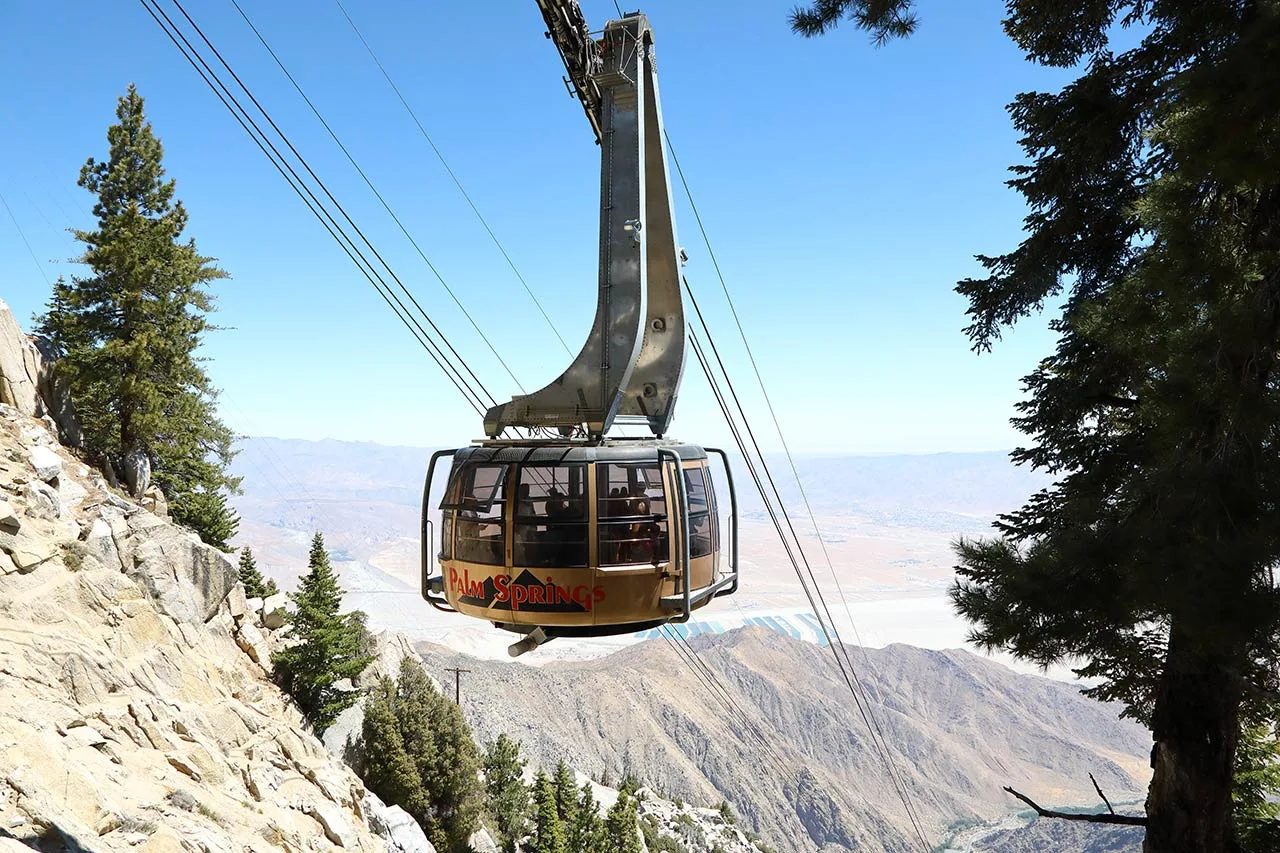
The Palm Springs Aerial Tram is the world's largest rotating tramway. The cars spin slowly during the ascent so everyone on board gets a full 360-degree view of Chino Canyon and the valley below. The tram runs along the sheer northeast face of Mount San Jacinto, which is one of the steepest mountain faces in North America.
It opened in 1963. The current cars, which hold about 80 people, were installed in 2000. There are no stops between the base and the summit: you ride up, you spend time at the top, you come back down. The engineering is genuinely impressive even if you're not the type to care about that sort of thing.
Ticket Prices
As of 2026, prices are:
- Adults: $36.95 (includes a $2 online processing fee)
- Seniors (65+): $33.95
- Children ages 3-10: $20.95
- Parking: $5 at the Valley Station lot
Buy tickets online at pstramway.vivaticket.com. Timed departure windows are available, which means you skip the ticket counter line entirely. On busy spring and summer weekends, that line can add a significant wait. The $2 fee is worth it.
Dining packages that bundle a tram ticket with a meal credit at the summit restaurants run $27.50 to $43 per person. Worth considering if you're planning to eat up there anyway. If you have AAA membership, military benefits, or access to Costco, check for discounts before purchasing full price.
Hours
- Monday through Friday: First tram up at 10:00am. Last tram up at 8:00pm.
- Weekends and holidays: First tram up at 8:00am. Last tram up at 8:00pm.
- Summer extended hours (late May through early September): Friday and Saturday last tram up at 9:00pm.
The tram closes periodically for maintenance, usually in late August or early September. Check the official hours page at pstramway.com before driving out.
What's at the Top
The Mountain Station is bigger than most people expect. When you step off the tram you're inside a building with observation decks, two restaurants (Peaks Restaurant for sit-down dining, Top of the Tram for quick service), a natural history museum, two documentary theaters, and a gift shop.
Outside is the edge of Mount San Jacinto State Park with over 50 miles of trails. The most popular short walk is the Desert View Trail, a two-mile loop that takes about an hour and delivers overlook views of the full valley below. It's relatively flat and accessible for most fitness levels.
For serious hikers, the trail to San Jacinto Peak at 10,834 feet is a genuine full-day undertaking. Check with rangers at the State Park Visitors Center inside the Mountain Station before attempting anything beyond the Desert View loop. Permits are required for overnight camping.
In winter, the area around the station often has enough snow for snowshoeing. The tram rents equipment at the top. It's a surreal experience: drive up from the desert in a t-shirt, strap on snowshoes, stomp around in two feet of snow, and ride back down into 70-degree heat an hour later.
When to Go
Summer (June through September): The temperature contrast is the draw. The valley is 105 degrees and the top is around 70. Weekday crowds are lighter. The extended Friday and Saturday evening hours mean you can ride up at sunset, watch the valley light up below, and come down in the dark. That's a good use of a summer evening.
Fall and spring: The most popular seasons overall. Wildflowers appear in spring. Fall foliage in the mountains. Comfortable temperatures at both elevations. Weekends fill up quickly. Go early or go on a weekday if you want to park without circling.
Winter: Snow at the top, mild desert weather below. The contrast is more dramatic than summer and the crowds are thinner than spring. Check snow conditions before heading out since heavy snowfall can close the outdoor trails temporarily.
When to avoid: Saturday mornings in March and April during Coachella festival weekends. The tram is not immune to valley-wide congestion and parking fills up. If you're in the valley for a festival, aim for a weekday visit.
How Much Time to Budget
Two to three hours minimum. The tram ride is 10 minutes each way, but even with timed tickets you'll wait for departures. Allow 30 minutes of buffer. The Desert View Trail takes an hour. Add time for the observation decks and a drink or snack and you're comfortably at two hours.
If you're hiking beyond the loop, plan for a full day. Bring a jacket regardless of season since the wind at 8,500 feet catches people off guard even in July.
Practical Notes
Getting there: The Valley Station is at the top of Tramway Road, off Highway 111 north of Palm Springs. From downtown Palm Springs it's about 15 minutes by car. There's no public transit to the base station, so you need a car or rideshare.
Dogs: Allowed in the tram cars and on the trails within the State Park. Keep them leashed.
Accessibility: The tram cars and Mountain Station are ADA accessible. The outdoor trails vary. Ask at the ranger station about current conditions on specific trails.
Cell service: Limited at the summit. Download what you need before you go up.
If you're staying at The Sundune in Palm Springs, the tram is about 20 minutes from the property. It makes an easy half-day, especially on a summer morning when you want relief from the heat before noon. For everything else worth doing in the valley, the Palm Springs vs Indio breakdown covers where to base yourself and what's close to each.
Is It Worth It?
Yes. It's the most dramatic 10 minutes you'll spend in the Coachella Valley. I've taken guests up there who've been coming to Palm Springs for years and never done it, and the reaction is always some version of "why did I wait so long."
The view from the top changes what you understand about the geography. You can see the whole valley spread out below, the Salton Sea to the south, the San Gorgonio Pass to the west. It puts everything in context in a way that a map doesn't. At $37 per adult it's not cheap, but it's not a tourist trap either. The scenery is real, the elevation change is real, and the trails are genuinely good.
Quick Reference
Tickets: Adults $36.95, seniors $33.95, children (3-10) $20.95. Parking $5. Buy online at pstramway.vivaticket.com. Dining packages $27.50 to $43 per person.
Hours: Weekdays first tram up at 10:00am. Weekends first tram up at 8:00am. Last tram up 8:00pm most nights, 9:00pm Friday and Saturday in summer. Check the official hours page for current schedule.
Elevation: Valley Station 2,643 feet. Mountain Station 8,516 feet. Expect 30 to 40 degrees cooler at the top than the desert floor below.