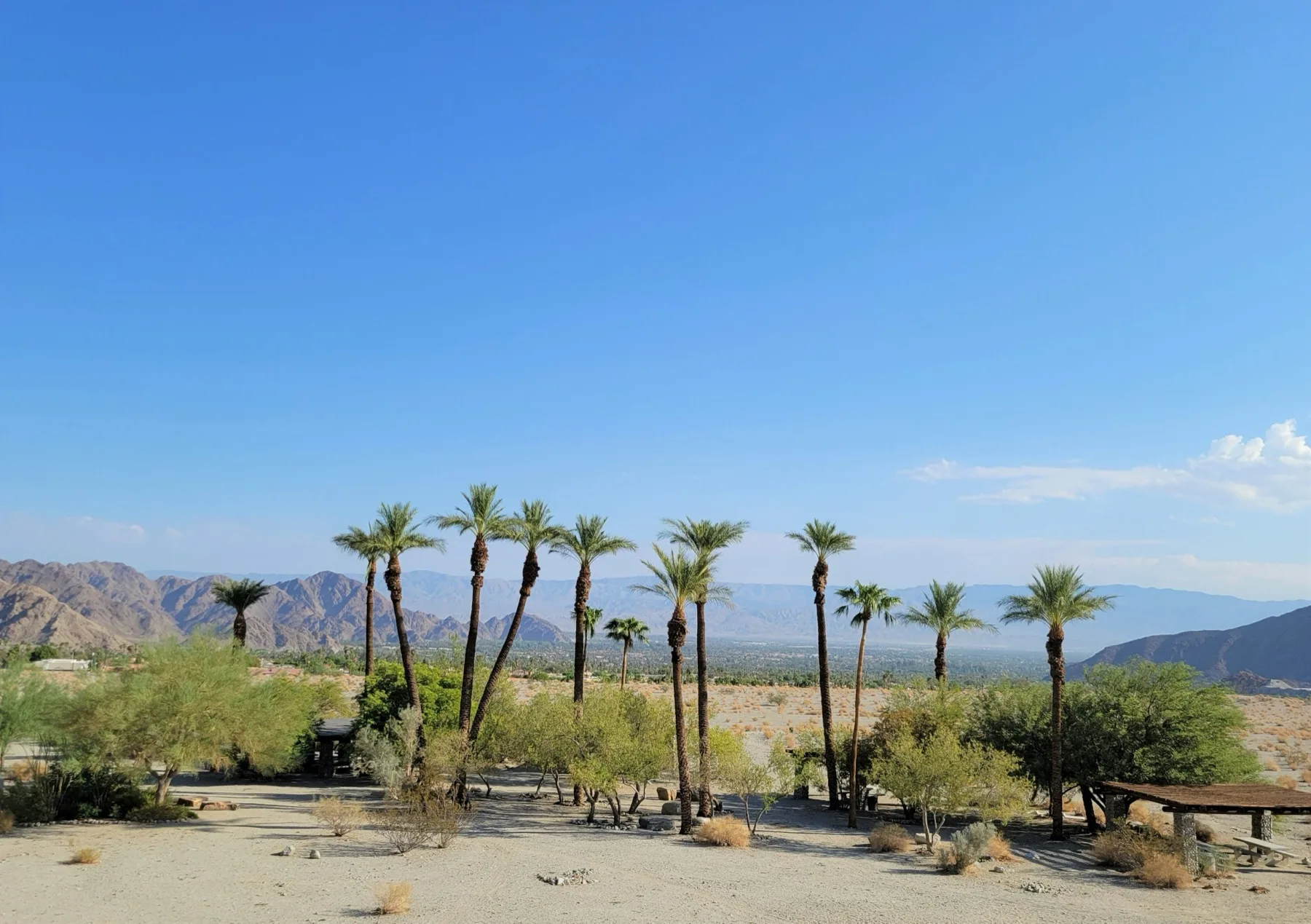
Most people who visit Palm Springs spend their time on Palm Canyon Drive, then wonder if they should do the aerial tram. Both are fine. But Indian Canyons, which sits at the southern edge of the city on Agua Caliente Band of Cahuilla Indians tribal land, is genuinely different from everything else you can do in the area.
It's the only place near Palm Springs where you can walk through a canyon with 2,000-year-old native fan palms, a stream running through it, and actual shade. In a desert where shade is scarce and the landscape often feels post-apocalyptic by 11am, that matters.
I've been several times. Here's what I'd want to know before the first visit.
The Basics
Entry fee: $12 per adult, $6 for children 6-12, free under 6. Cash or card accepted at the gate.
Hours: Open daily 8am to 5pm (last entry at 4:30pm). Closed on select Fridays for tribal ceremonies. Check the Agua Caliente website before you go.
Getting there: Take South Palm Canyon Drive south from downtown Palm Springs for about 4 miles. The road dead-ends at the trading post and tollgate. There's free parking at the trailheads.
Season: October through May is ideal. Summer is brutal. Peak desert heat in July and August regularly hits 115 degrees. If you're visiting in summer, plan to be on the trail by 7am or skip it entirely and go in the evening if the gate is open. Heat-based activity planning is worth doing in summer.
Palm Canyon
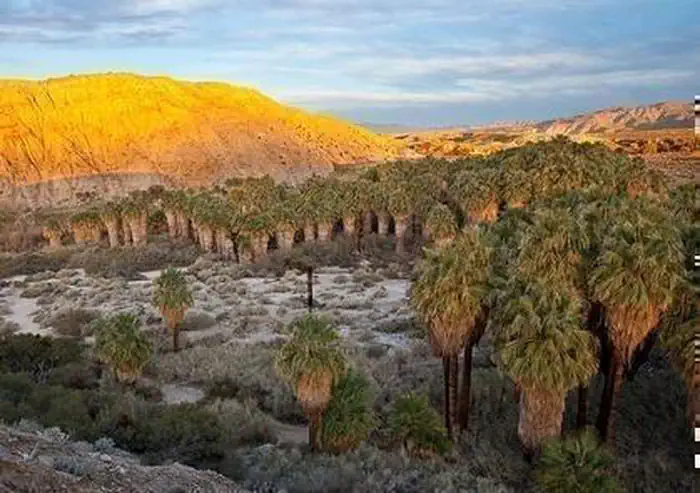
Palm Canyon is the main attraction and the one I'd prioritize if you only have a few hours. The canyon is about 15 miles long, though most people do a 2-3 mile out-and-back along the main trail.
The California fan palms here are the largest natural grove in the US. Some of the palms in the lower canyon are 150 to 200 years old. The trunks are massive, clustered tightly along the stream, and the scale of it doesn't quite register until you're standing inside it.
The trail starts at the trading post (which has snacks, water, and some light merchandise), drops down into the canyon via a moderate switchback descent, then follows a creek upstream through the palm grove. Flat sandstone slabs make for easy scrambling near the water.
Distance: 3 miles roundtrip for the standard out-and-back. Elevation change: about 400 feet.
Difficulty: Moderate. The descent is steep in places, and the loose gravel on the switchbacks gets slippery. Bring trekking poles if you have them.
Andreas Canyon
Andreas Canyon is a mile east of Palm Canyon and is usually less crowded. The trail here is flat and runs along a year-round stream through a tight rocky canyon. It's about 1 mile roundtrip.
This is the better option if you have kids under 8, older guests who want to see the canyons without the switchback descent, or anyone who wants to be in and out in under 90 minutes. The palm grove is smaller than Palm Canyon but the canyon walls are more dramatic. You're walking between 200-foot rock faces in places.
Andreas also has a picnic area with tables at the trailhead. It's a reasonable spot for lunch if you pack something from town.
Murray Canyon
Murray Canyon is the third and least-visited of the three. It requires a 4-mile roundtrip hike to reach the waterfall at the back of the canyon. The trail is unsigned in places and involves several stream crossings. Not technical, but you'll get your feet wet if there's been recent rain.
Honest take: Murray Canyon rewards the effort, but if it's your first visit, do Palm Canyon and Andreas first. Murray is for the second trip.
What to Bring
The trail conditions here change faster than most people expect. It can be 75 degrees at the trailhead and 90 degrees by the time you're halfway down into the canyon. Standard desert hiking gear applies:
- At least 2 liters of water per person
- Sunscreen, even in winter
- Closed-toe shoes (sandals work on Andreas but not Palm Canyon)
- A hat with a brim
- Snacks. The trading post sells overpriced granola bars. Bring your own.
Combining Indian Canyons with a Longer Day
Indian Canyons is about 25 miles from our Indio properties. From The Cozy Cactus or Terra Luz, plan on 30 to 35 minutes of driving.
From The Sundune in Palm Springs, it's a 10-minute drive south.
A full Indian Canyons morning leaves you back in Palm Springs by noon with time for lunch on Palm Canyon Drive before it gets too hot. Birba, Workshop Kitchen, or Cheeky's are all worth the stop. Then back to the pool in the afternoon, which is exactly the right order of operations in this climate.
If you want to do the Aerial Tram on the same day, reverse the order. Tram first (cooler up top, better views in the morning), canyons after. Both are ticketed experiences and neither requires advance reservations in shoulder season, though summer weekends on the tram can have long waits.
A Note on the Land
Indian Canyons is actively managed tribal land of the Agua Caliente Band of Cahuilla Indians, who have lived in these canyons for thousands of years. The entry fee goes directly to tribal operations and land stewardship. This is not a national park or a county trail system. Respect the posted rules, stay on designated trails, and don't pick plants or disturb anything in the creek beds.
The Cahuilla have a specific connection to the California fan palm. The fruit was a food source, the leaves were used for baskets and construction, and the canyon system provided water through the desert. That context is worth holding while you're there.
Eann runs Indigo Palm Collective, a small vacation rental company with properties in Indio and Palm Springs. She's hiked these canyons a handful of times and still thinks the first drop into Palm Canyon is the best moment of any first visit.