
When I started hosting at The Cozy Cactus, I thought vacation rental hosting tips were mostly about amenities. Get the right couch. Buy the nicer towels. Put a bottle of wine on the counter. That kind of thing.
Four years and 191 reviews later, I can tell you that's wrong. Or at least, it's incomplete in a way that costs you stars. Here's what actually matters, in the order I learned it.
The Details Guests Review Are Never What You Expect
I spent a lot of money on the living room couch. It has never appeared in a single review. You know what has? The labeled drawers in the kitchen. The specific coffee brand we stock. The fact that the pack-n-play is already assembled when families check in, not stuffed in a closet with a note that says "available upon request."
Guests don't write about expensive things. They write about friction that was removed. They write about the moment they arrived exhausted and everything was already handled. They write about the small thing they didn't know they needed until it was there.
This is annoying to internalize because it means you can't just spend your way to better reviews. You have to think about the experience at a granular level, guest by guest, scenario by scenario. A family arriving at 9pm with a sleeping toddler needs something completely different from a couple coming for Coachella weekend.

The living room guests barely mention. The labeled kitchen drawers they always do.
Response Time Builds More Trust Than Any Amenity
A 10-minute response at 10pm builds more trust with a guest than anything you can put in the house. Full stop.
When someone is traveling, especially with family, uncertainty is their enemy. They see a question form in their mind ("Is there a crib? Is the pool heated this time of year? Where do I park?") and the moment they fire off that message, they start measuring how much you care by how fast you respond.
I don't outsource my messaging. I know other hosts do, and I understand why: it's time-consuming. But I also know that the tone and speed of responses is one of the things guests feel even if they can't name it. They just know they felt taken care of. Or they didn't.
Fast response also short-circuits the spiral. A guest who hears back in 8 minutes stops worrying. A guest who waits 4 hours has already imagined every possible problem and mentally downgraded their expectation of the stay.
Your Welcome Guide Is Doing More Work Than You Think
I rewrote the Cozy Cactus welcome guide three times before I got it right. The first version was a list of rules. The second was a list of rules dressed up with friendly language. The third actually explained things: why we ask guests to run the dishwasher before checkout (the cleaning team's schedule is tight and it helps them move fast), where to find the extra pool towels, the best route to the Coachella grounds that avoids the worst festival traffic.
Guests who read the welcome guide leave better reviews. That's not a theory, I can see it in the reviews themselves. The guests who mention the guide by name leave 5-star reviews at a higher rate than those who don't. The guide sets expectations, answers questions before they become frustrations, and signals that you thought about their experience before they even arrived.
If your welcome guide is a PDF with 14 rules in bullet points, it's not doing anything for you.
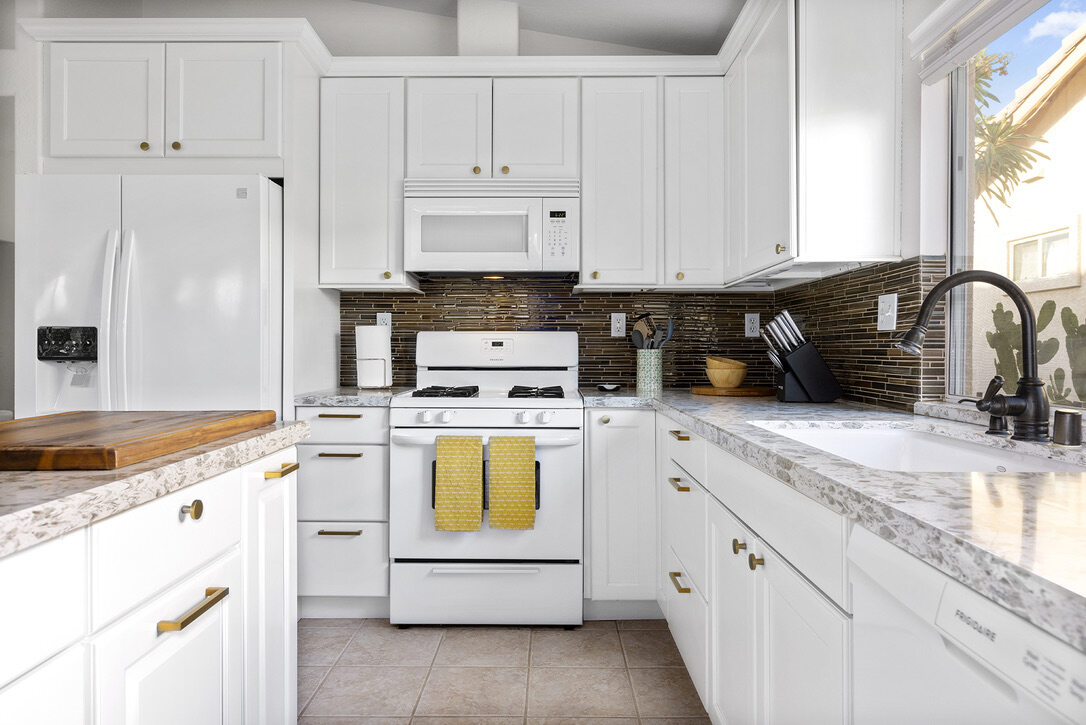
The kitchen where labeling drawers became a recurring review mention. Small friction, eliminated.
Cleanliness Is Table Stakes
I want to be honest about this one because I see hosts treat cleanliness as a differentiator. It isn't. You get zero credit for a clean property. Guests expect it the way they expect the locks to work. But you lose everything without it.
One cleaning miss, one hair in the shower, one sticky counter, and it colors the entire stay. A guest who has a 9/10 stay will still lead their review with "I found a hair on the soap dish" if that's what stood out. That's just how human memory works under stress.
We use professional cleaners with a detailed checklist, not a general cleaning service. There's a difference. The checklist gets revised whenever a guest mentions something they noticed. It's not glamorous work but it's the foundation everything else builds on.
One Honest Response to a Bad Review Builds More Trust Than the Review Lost
I've had bad reviews. Not many, but they happened, and the first one hit like a punch. The instinct is to either respond defensively or not respond at all. Both are wrong.
The right move: acknowledge what was valid, explain what you've fixed, stay warm. Don't argue. Don't say "as per our listing description." Future guests read those responses more carefully than you'd think. They're trying to figure out who they're dealing with. A calm, accountable response to a complaint tells them more about you as a host than 50 five-star reviews do.
One of the strongest reviews I ever received came from a guest who had a legitimate complaint about a maintenance issue. I responded to their review, we fixed the problem, and they came back. Their second review was glowing. That loop, complaint to resolution to loyalty, is only possible if you respond right the first time.
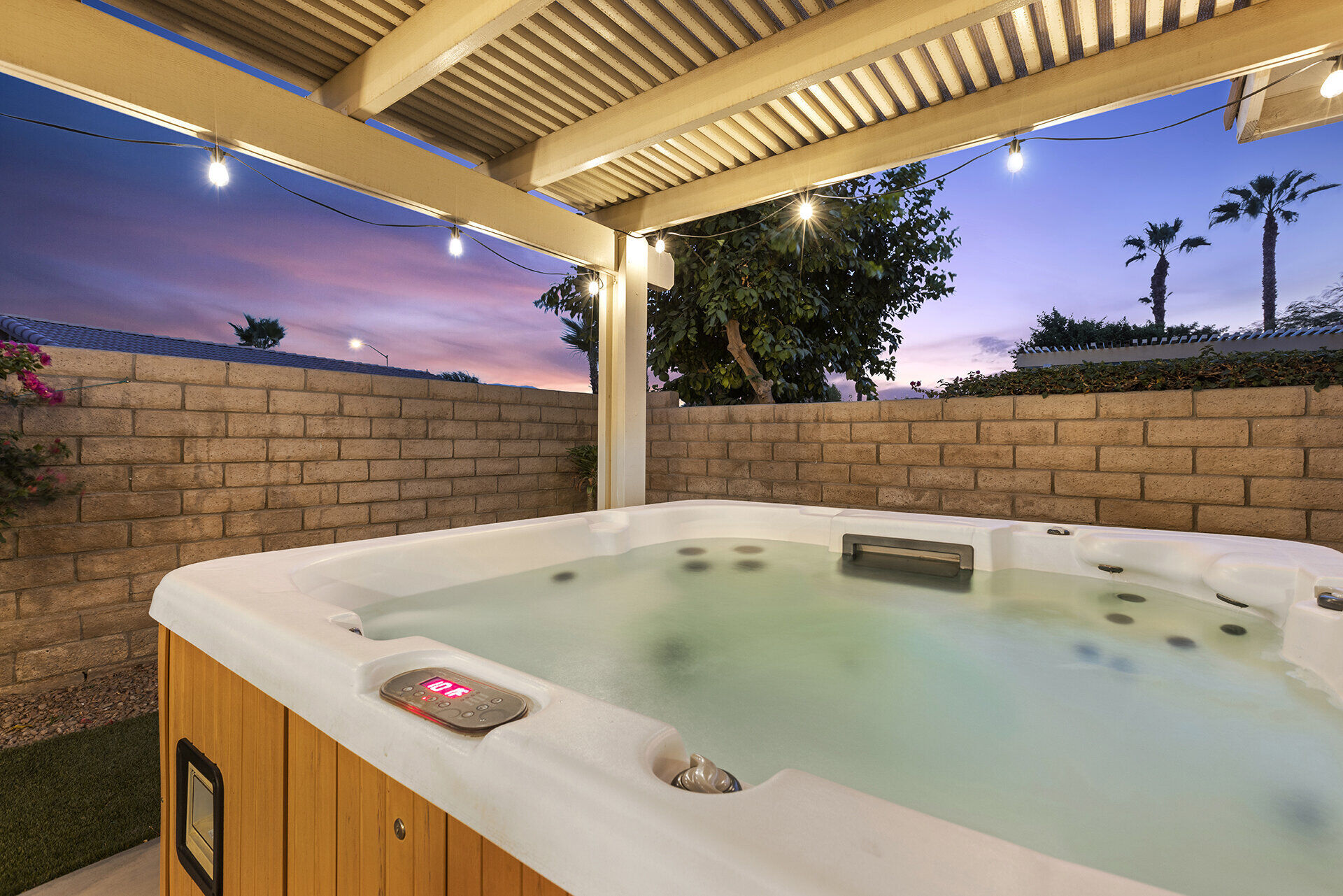
The hot tub gets mentioned in reviews. So does the response time when it had a maintenance issue.
Guests Who Book Direct Are Easier to Host
This one surprised me when I noticed it. Guests who book through our site at indigopalm.co rather than through Airbnb tend to be more communicative, more flexible, and easier to work with overall.
My theory: the act of going to a direct website signals intent. They found us, chose to trust us outside the platform, and came in with a different relationship to the transaction. It's not adversarial in the way platform bookings sometimes are, where guests feel protected by the algorithm and hosts feel monitored by it.
Direct bookings also let me have a real conversation before check-in. I know more about what they're planning, what they need, who's in the group. That makes it easier to anticipate rather than react.
The Pricing Lever Nobody Talks About
A $20 discount for a longer stay fills more calendar than any other tool I've used, including dynamic pricing adjustments, last-minute deals, and promotional pricing. The math is simple: a five-night stay at $20 off per night costs me $100. A five-night booking fills five nights I might otherwise spend piecing together two-night stays with cleaning fees and gaps in between.
The psychology is also real. Guests feel like they're getting something. They commit to a longer stay, which means more time to settle in and actually enjoy the property rather than rushing in and out. Guests who stay five nights or more review better on average. They've actually had a vacation, not just a weekend.
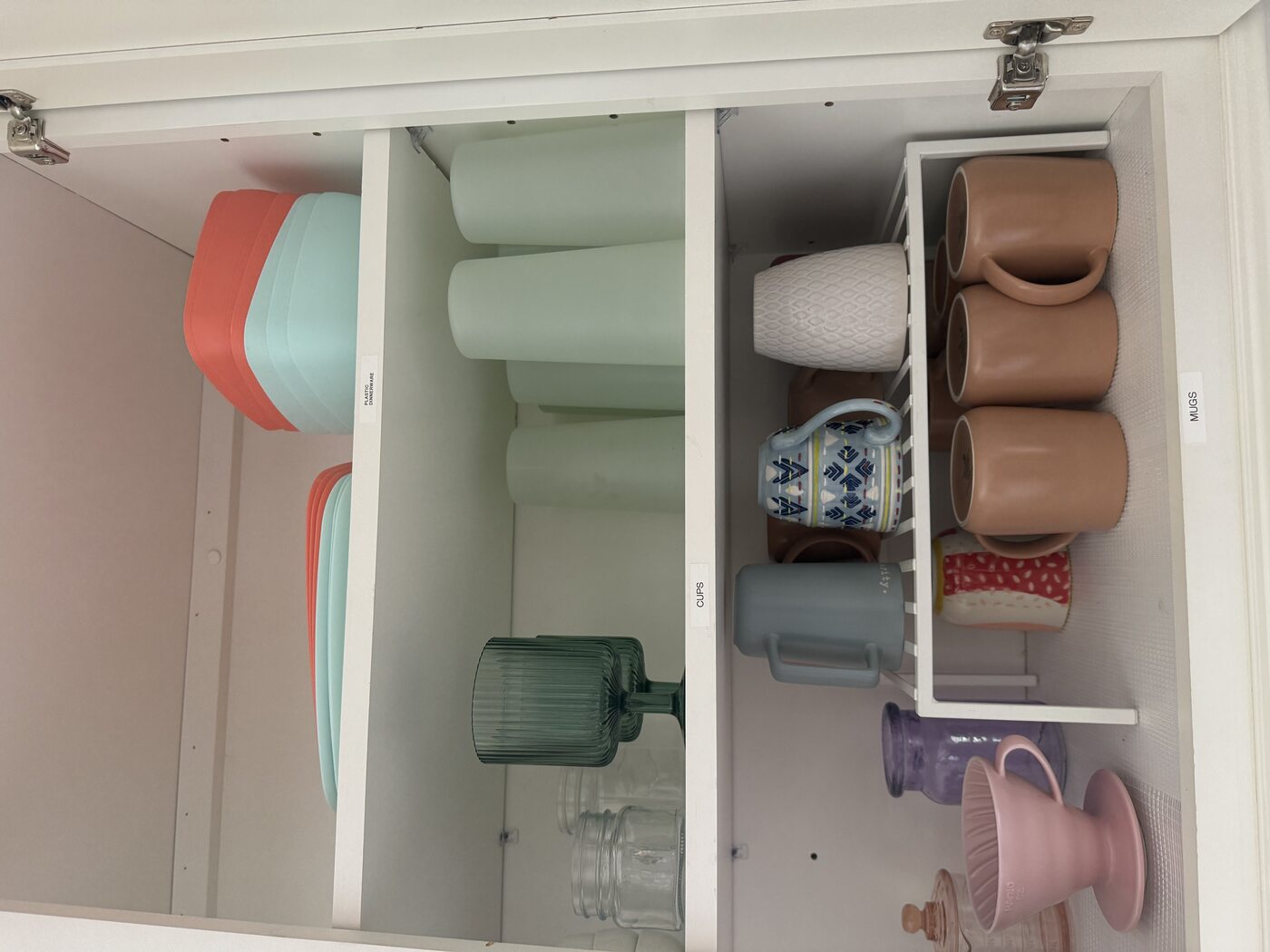
The labeled drawer system at The Cozy Cactus. Guests who stay five nights figure out the whole house and use all of it.
The Bigger Picture
Four years in, the thing that still runs all of this for me is empathy. Not as a business strategy but as an actual orientation. I've stayed in vacation rentals that felt like the host was braced for me to break something. I've stayed in ones that felt like the host was genuinely glad I was there. The difference is real and guests feel it without being able to name it.
191 reviews is a lot of data. But the data mostly confirms what you already know if you think about it from the guest's side: they want to feel like someone thought about them before they arrived. They want questions answered fast. They want things to work. And they want to know that if something goes wrong, there's a real person who will fix it without making them feel bad about asking.
That's not complicated. It's just consistent.
If you're planning a stay and want to see what this looks like in practice, read more about what to prepare for a desert vacation rental stay. Or if you're curious how the Cozy Cactus came together in the first place, the full origin story is here.
FAQ: Vacation Rental Hosting
What vacation rental hosting tips actually move the needle on Airbnb reviews?
Response time matters more than most hosts realize. Guests who get fast replies, even at odd hours, feel taken care of and that shows in reviews. Beyond that: small friction-removing details (labeled drawers, pre-assembled baby gear, a welcome guide that actually explains things) get mentioned in reviews far more than expensive furniture does.
How do you respond to a bad Airbnb review?
Acknowledge what was valid, explain what you fixed, keep it warm and brief. Don't argue. Don't be defensive. Future guests read host responses to decide whether they can trust you, and a calm, accountable response to a complaint builds more trust than ignoring it or fighting it.
Is it worth setting up a direct booking website for a vacation rental?
In our experience, yes. Guests who book direct tend to be more communicative and easier to host. You also know more about their trip before check-in, which makes anticipating their needs easier. Platform fees add up fast, and the guest relationship is more direct when there's no algorithm in the middle.
What's the best pricing strategy to fill gaps in a vacation rental calendar?
A modest discount for longer stays, around $15-20 per night for stays of five nights or more, fills calendar gaps better than most other levers. It costs less than it sounds (usually $75-100 total), commits guests to longer trips, and longer stays tend to generate better reviews because guests have actually had time to relax.